
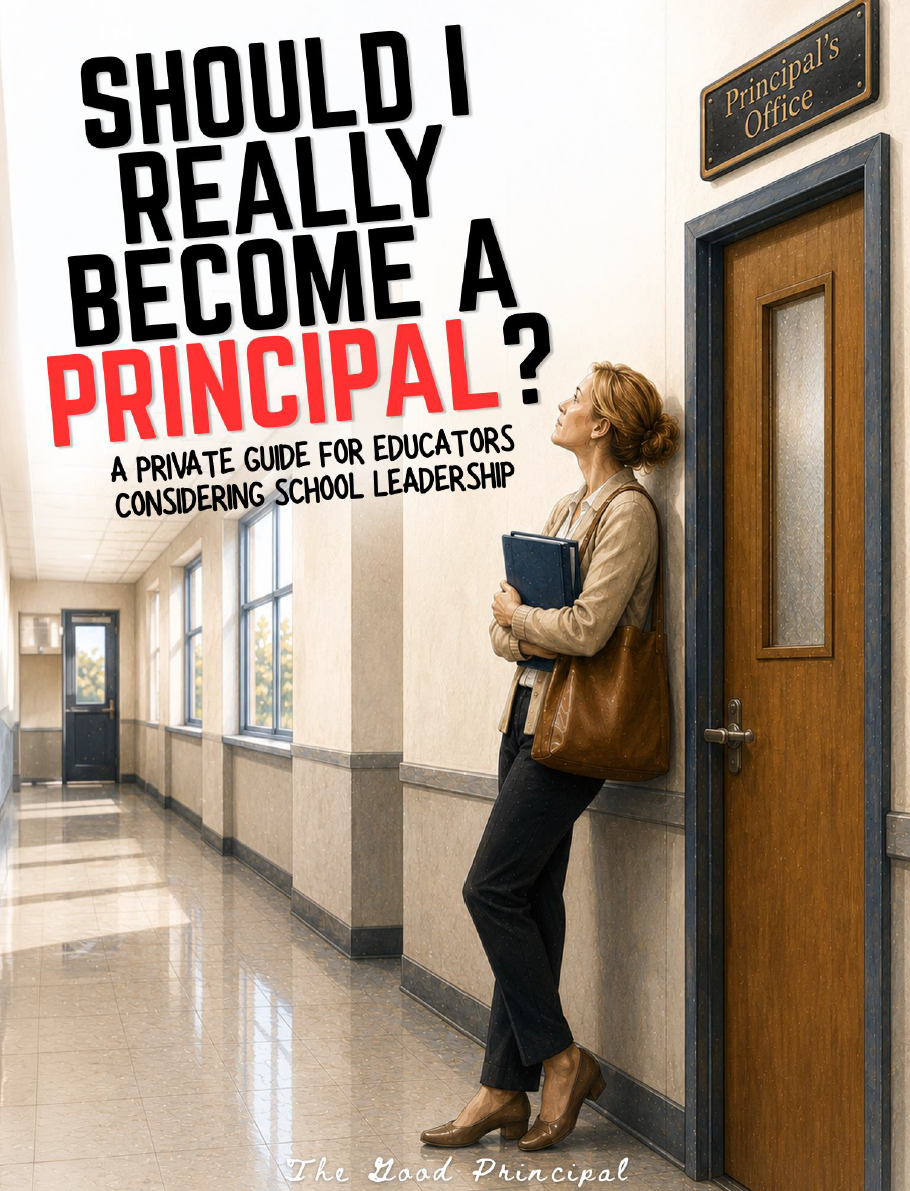
Should I Really Become A Principal?
A Private Guide for Educators Considering School Leadership.
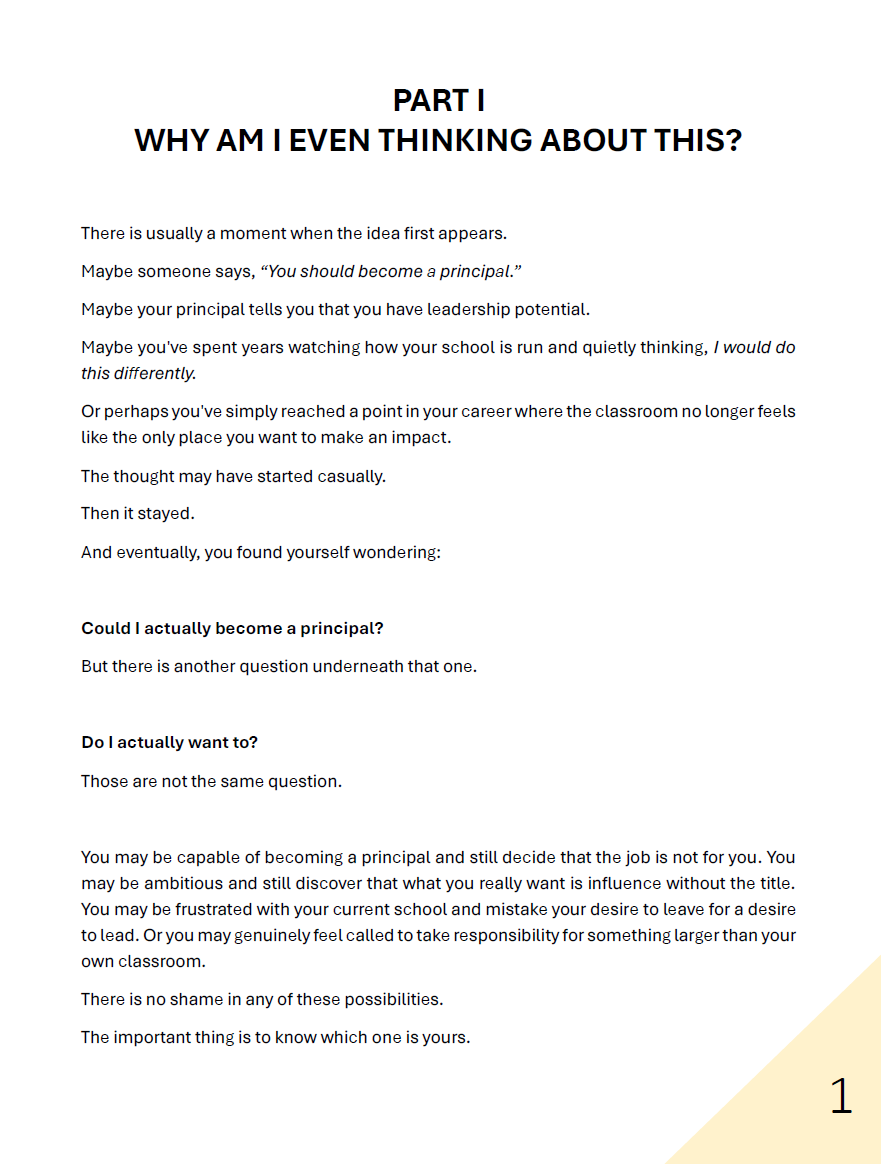
Maybe someone has told you that you would make a good principal.
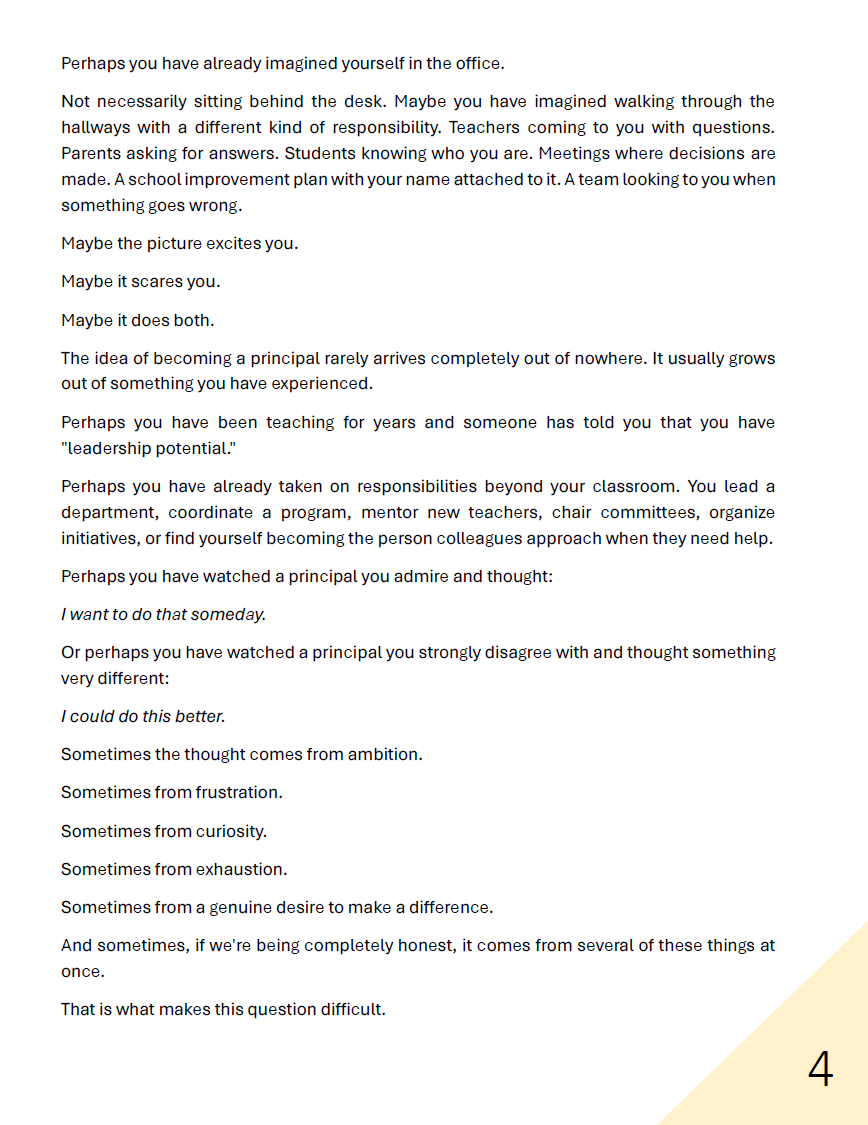
Maybe you have started imagining what it would feel like to lead a school.
Maybe you are ready for something bigger.
Or maybe you are simply tired of the classroom and wondering whether leadership is the next logical step.
Those are not the same reasons.
And before you apply, accept the promotion, or begin building your life around the idea of becoming a principal, it is worth asking a more honest question:
Do I actually want the job?
Should I Really Become a Principal? was written for that moment.
Not to convince you to move into leadership.
Not to discourage you from it.
But to help you understand what you are really considering before the title becomes your reality.

Everyone keeps telling you that you’re ready.
Maybe your principal has mentioned it.
Maybe a colleague has said, “You should apply.”
Maybe you’ve become the person people turn to when something needs organizing, fixing, explaining, or calming down.
You’ve led committees. Mentored younger teachers. Handled difficult situations. Taken on responsibilities that weren’t technically yours.
And perhaps you’ve watched a decision being made by school leadership and quietly thought:
I would have handled that differently.
So when people tell you that you’d make a good principal, part of you believes them.
Maybe they’re right.
But there is a question hidden underneath all that encouragement:
Do you actually want the life that comes with the position?
Not whether you could do it.
Not whether you’d be good at it.
Not whether you’re qualified.
Whether you actually want it.

Being capable of the job is not the same as wanting the life.
It’s easy to imagine what becoming a principal represents.
Growth.
Influence.
Recognition.
A chance to shape a school instead of wishing someone else would change it.
And there is a lot about leadership that can be deeply meaningful.
You can support teachers.
Improve things that haven’t been working.
Create better experiences for students.
Build a healthier culture.
Use your position to protect ideas and people you believe in.
But before you imagine the title, imagine something less exciting.
An ordinary Tuesday.
A teacher needs you before classes begin.
Another is unhappy with yesterday’s decision.
A parent wants an answer.
Something is due by four.
Two people want completely different things from you, and both believe they’re right.
Eventually, everyone leaves your office.
The decision doesn’t.
Sometimes it goes home with you.
That doesn’t make principalship a bad choice.
It makes it a choice worth understanding.
And there are questions you may not know you should be asking yet.
What happens when people who once treated you as a colleague begin treating you as the person who approves, evaluates, corrects, or decides?
How comfortable are you making a decision when there is no option that keeps everyone happy?
What if the part of teaching you love most becomes the part you do least?
How much of your desire to become a principal comes from wanting the work—and how much comes from feeling that successful teachers are supposed to keep moving upward?
What happens when “I could do this better” becomes “Now I am responsible for doing it better”?
And how do you know whether the hesitation you’re feeling is simply normal fear before a big step…
or something you should actually listen to?
There are questions about principalship you already know to ask.
And there are questions you may only discover after you’re sitting in the office.
Those are the ones worth considering now.

Most books about principalship begin after you’ve already said yes.
They teach you how to lead.
How to manage.
How to communicate.
How to improve a school.
How to become a better principal.
Those books matter.
But they assume something has already been decided:
You want the job.
What if you haven’t decided that yet?
What if you’re still standing somewhere before the application, before the interview, before the appointment, asking:
“Should I become a principal in the first place?”
That’s where this book begins.
Should I Really Become A Principal?
A Private Guide for Educators Considering School Leadership
This is a private decision guide for teachers, educators, aspiring school leaders, and anyone seriously considering principalship who wants to understand the choice more honestly before making it.
It isn’t a leadership textbook.
It isn’t a manual for running a school.
And it isn’t an argument for why you should become a principal.
It comes before all of that.
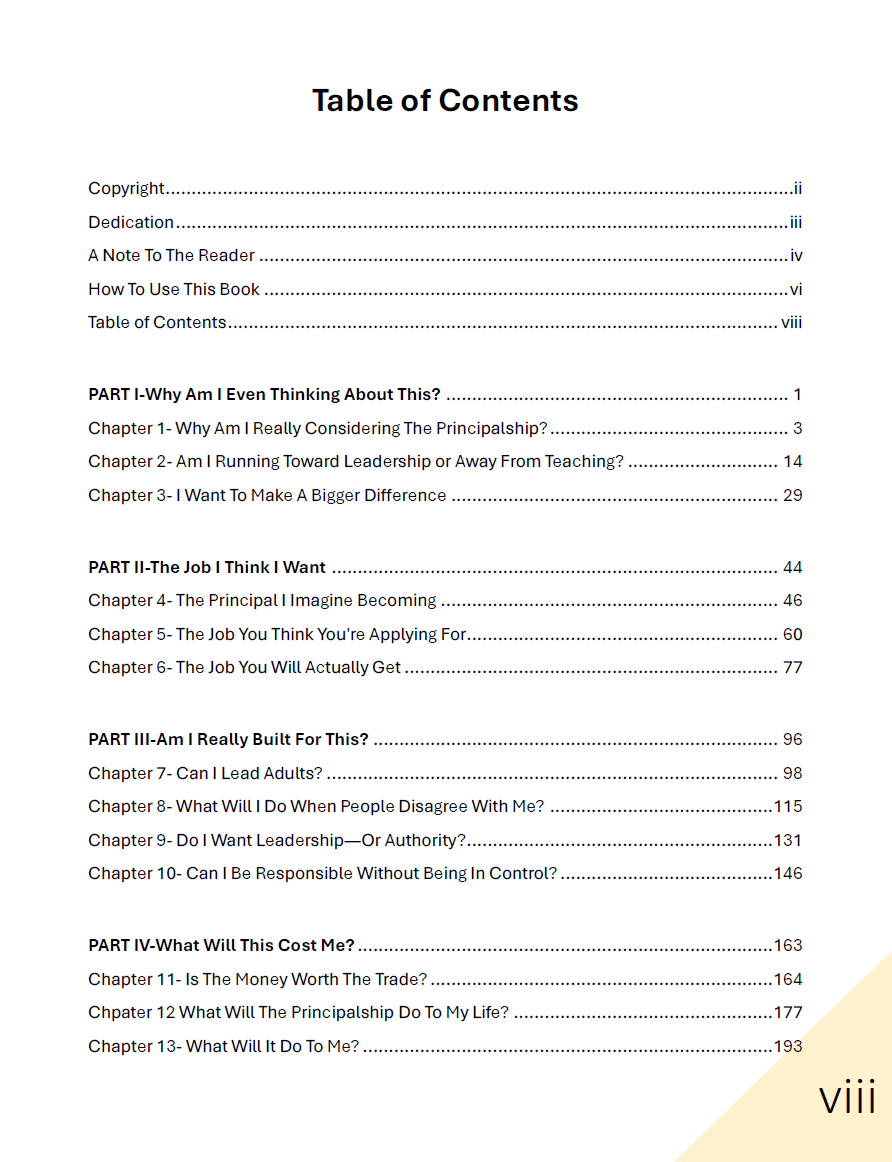
It gives you a structured, private way to look beyond the title and think about the work, the responsibility, the relationships, the tradeoffs, and the life surrounding the position.
Not so somebody else can give you an answer.
So you can understand your own.
Because “do I want to lead?” is only the beginning.
You could sit down tonight and make a list of pros and cons.
You could ask a principal what the job is like.
You could search for principal responsibilities.
You could ask yourself whether you’re ready.
And all of those things can help.
But this book is designed to take the question further.
You’ll examine what you’re actually hoping leadership will give you.
You’ll consider what may happen when former peers become people you have to lead.
You’ll think about the difference between wanting more influence and wanting the actual work of principalship.
You’ll confront the less visible tradeoffs between responsibility, time, relationships, identity, and the rest of your life.
You’ll also look at the reasons leadership can be worth choosing—the ability to shape a school, support teachers, improve systems, and influence the experience of students far beyond a single classroom.
And you’ll encounter questions that are much easier to think about before the job becomes yours.
This isn’t about making principalship look frightening.
And it isn’t about making it look impressive.
It’s about seeing enough of the reality to decide whether you want your place inside it.
Who is this book for?
It may be for you if people have started telling you:
“You should apply.”
If becoming a principal has always been part of your career plan—but now that the possibility feels real, you’re thinking about it differently.
If you’re an experienced teacher wondering what comes next.
If you want greater influence in your school but aren’t sure whether principalship is the right way to pursue it.
If you’re already preparing for leadership while privately wondering whether you actually want the life attached to the position.
Or if you simply don’t want to make a major career decision because everyone around you assumes the answer should be yes.
You don’t need to be certain before you read it.
Uncertainty is enough.
This is more than a question about your next job.
If you decide to pursue principalship, you may spend months preparing.
Completing requirements.
Applying.
Interviewing.
Waiting.
And if you eventually accept the position, you may spend years living the answer you gave.
So spending a few quiet hours examining whether this is actually the work and life you want isn’t overthinking.
It’s giving an important decision the attention it deserves.
Because sometimes the expensive decision isn’t buying a book you didn’t need.
It’s spending years pursuing something before asking yourself whether you truly wanted it.




The book won’t tell you to become a principal.
That would defeat the purpose.
You may reach the end and think:
Yes. I want this.
Not simply because people think you’d be good at it.
Because you’ve looked more carefully at what the work may ask from you and still want to step forward.
Or your answer may be:
Yes. But not yet.
Perhaps leadership belongs in your future without needing to become your next move.
And perhaps you’ll realize:
No. This isn’t the life I want.
That doesn’t make you less capable.
And it doesn’t make your career less meaningful.
It simply means you’ve separated being able to do something from wanting to spend part of your life doing it.
The book doesn’t need a particular answer from you.
It needs an honest one.
You may still have doubts when you finish.
But they can be better doubts.
You’ll have a clearer sense of what attracts you to leadership.
What worries you.
Which parts of the work you may be willing to grow into.
Which tradeoffs matter most to you.
What expectations belong to you.
And which ones may have come from everyone else.
You may still ask:
“Am I ready?”
But you’ll also have a more important question available to you:
“Is this a life I am willing to choose?”
That’s the clarity this book is designed to help you build.
Not certainty.
Not a verdict.
A decision you understand.
Read this before you apply.
Not because a book should decide your career.
It shouldn’t.
Read it because once you accept the position, the question changes.
Before the office, you still get to ask:
“Do I want this?”
After the office, the question may become:
“How do I make this work?”
If you’re seriously considering principalship, give yourself the opportunity to ask the first question properly.
You may spend years living with your answer.
A few hours thinking carefully about it is a small part of that decision.
If you finish the book and still want the principalship, good.
You’ll understand more clearly why you’re choosing it.
If you realize you’re not ready yet, good.
That’s valuable information before you apply.
And if you discover that you never really wanted the position in the first place?
That may be one of the most useful things you could learn before your name is on the office door.
Before everyone starts calling you principal, make sure you want to become one.
Other people can recognize your potential.
They can encourage you.
They can tell you that you’d be excellent at the job.
They may even be right.
But they don’t have to live your version of school leadership.
You do.
You don’t need another person telling you to apply.
You need enough perspective to understand what you’re choosing—and enough honesty to decide for yourself.
Should I Really Become A Principal?
A Private Guide for Educators Considering School Leadership
For educators who want to understand the life behind the position before deciding whether to step into it.
Your Next Step Starts Here.
You don’t have to decide today. Give yourself the space to explore whether school leadership is right for you—privately, honestly, and at your own pace.
- Instant download after successful payment
- PDF + EPUB formats included
- Read on your preferred device—laptop, phone, tablet, or compatible e-reader
- Digital product only—no physical book will be shipped


Contact Us
You don’t need another person telling you to lead harder. Sometimes you need something that understands what the job actually feels like.