
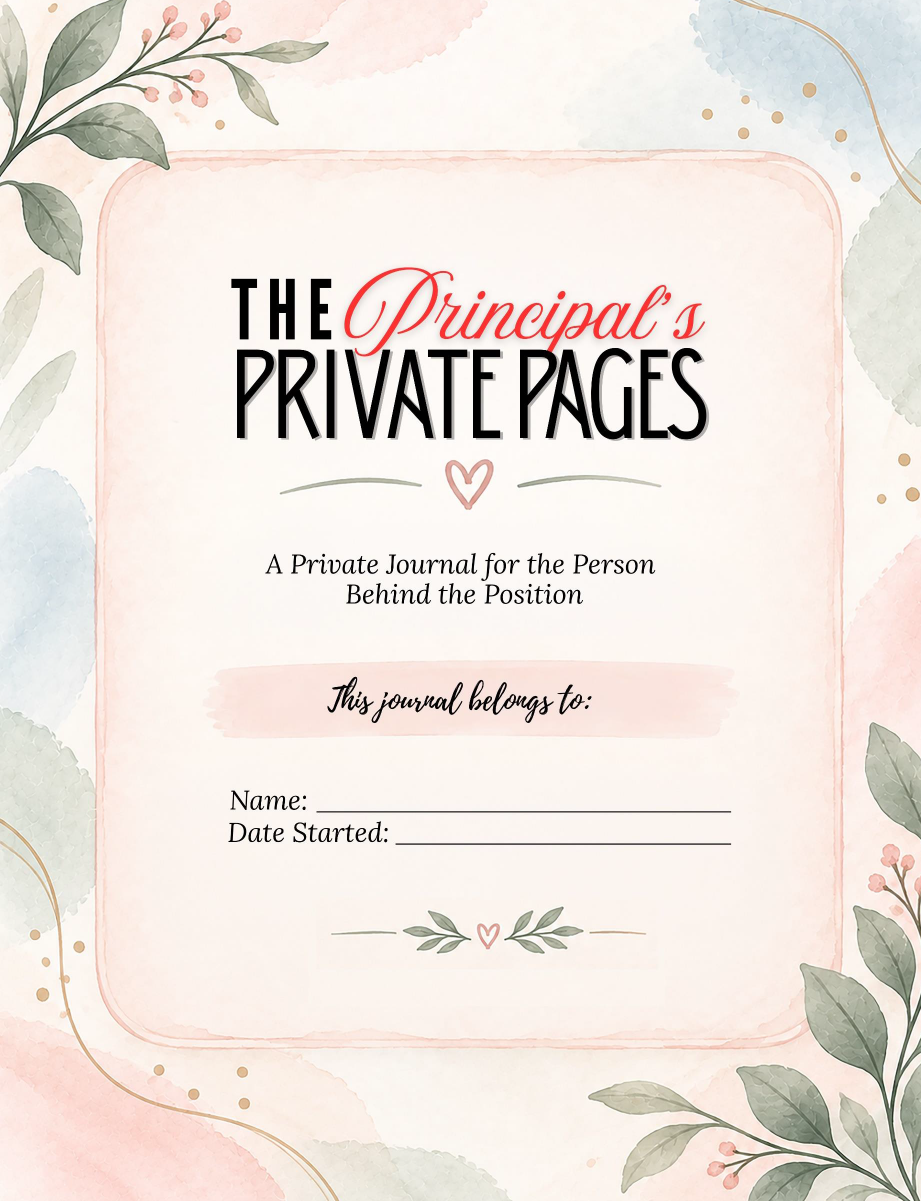
The Principal’s Private Pages
A Private Journal for the Person Behind the Position
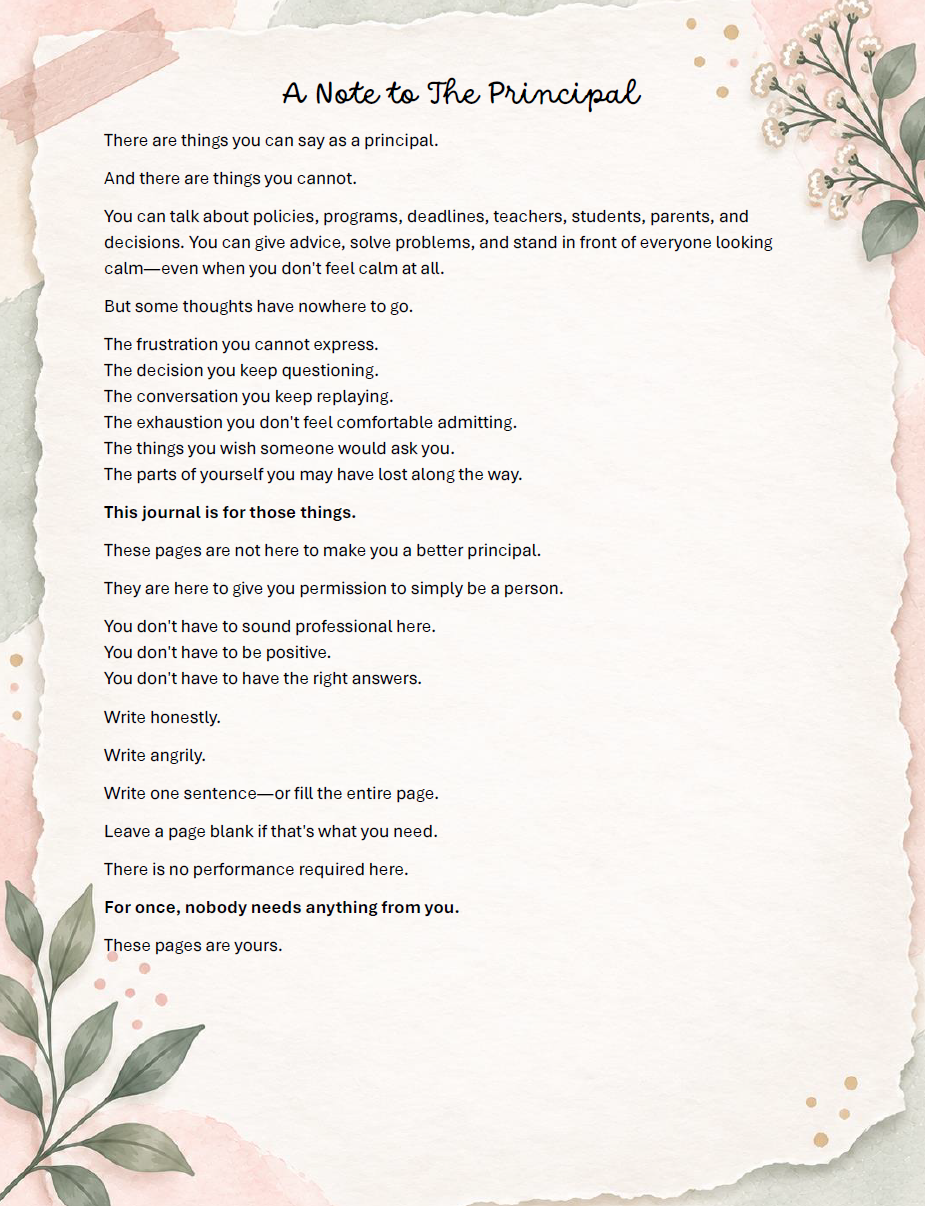
There are things school leaders carry that never make it into meeting minutes.
Things you cannot say during faculty meetings.
Things you cannot explain to parents.
Things you cannot always tell your staff.
Things you sometimes do not even know how to explain to the people waiting for you at home.
A difficult conversation.
A decision that is still sitting heavily with you.
Anger you had to hide.
Disappointment you could not show.
A thought you were afraid would sound selfish if you said it out loud.
And sometimes, you simply need somewhere to put all of it.
The Principal’s Private Pages was created for those moments.
Not to make you more productive.
Not to give you another leadership strategy.
Not to turn every difficult day into a lesson.
But to give the person behind the position a private place to think, write, unload, question, and breathe.

Printable Digital PDF · 50 Guided Prompts
There are things you probably shouldn’t say in the staff room.
Things you don’t want to bring home.
Things you can’t put in an email.
Things that would sound wrong without the whole story.
Things you’re angry about.
Things that hurt more than you expected.
Things you wish you had said differently.
Things you’re still thinking about long after everyone else has moved on.
So you do what school leaders become very good at doing.
You keep going.
You answer the next message.
Sign the next document.
Listen to the next concern.
Walk into the next meeting.
And somewhere in the background, the conversation from three hours ago is still happening inside your head.
Some thoughts don’t need another meeting.
They need somewhere to go.

Because you can’t always say what you really want to say.
A teacher leaves your office.
The conversation is over.
But yours isn’t.
You think of what you should have said.
What you’re glad you didn’t say.
What you wish they understood.
What bothered you.
Whether you were too firm.
Whether you weren’t firm enough.
Then another person arrives.
So you put the first conversation away.
At least outwardly.
School leadership requires that constantly.
You cannot react to everything you feel.
You cannot tell everyone everything you know.
You cannot explain every decision completely.
You cannot always defend yourself.
And you certainly cannot send every message you compose in your head.
Sometimes professionalism means knowing what not to say.
But unsaid doesn’t necessarily mean gone.

Where do all those unsaid things go?
The frustration you couldn’t show.
The decision you keep replaying.
The person you’re trying very hard to be patient with.
The criticism that stayed with you longer than you want to admit.
The moment you felt embarrassed.
The day everyone seemed to need something.
The resentment you feel guilty for feeling.
The thought:
“I don’t want to do this today.”
The other thought:
“I miss who I was before this job took up so much space.”
And perhaps the one you’re least comfortable admitting:
“I don’t know if I want this anymore.”
Not every thought needs action.
Not every emotion needs a conversation.
Not every frustration needs to become a decision.
But sometimes it helps to stop carrying all of them in the same place.
Your head.
That is why the principal’s private pages exists.
A Private Journal for the Person Behind the Position
This isn’t a planner.
It isn’t another leadership workbook.
It won’t ask you to write your school vision, identify your strategic priorities, set professional goals, or list five ways you can become a more effective leader.
You already have enough things asking you to perform.
These pages ask you to be honest.
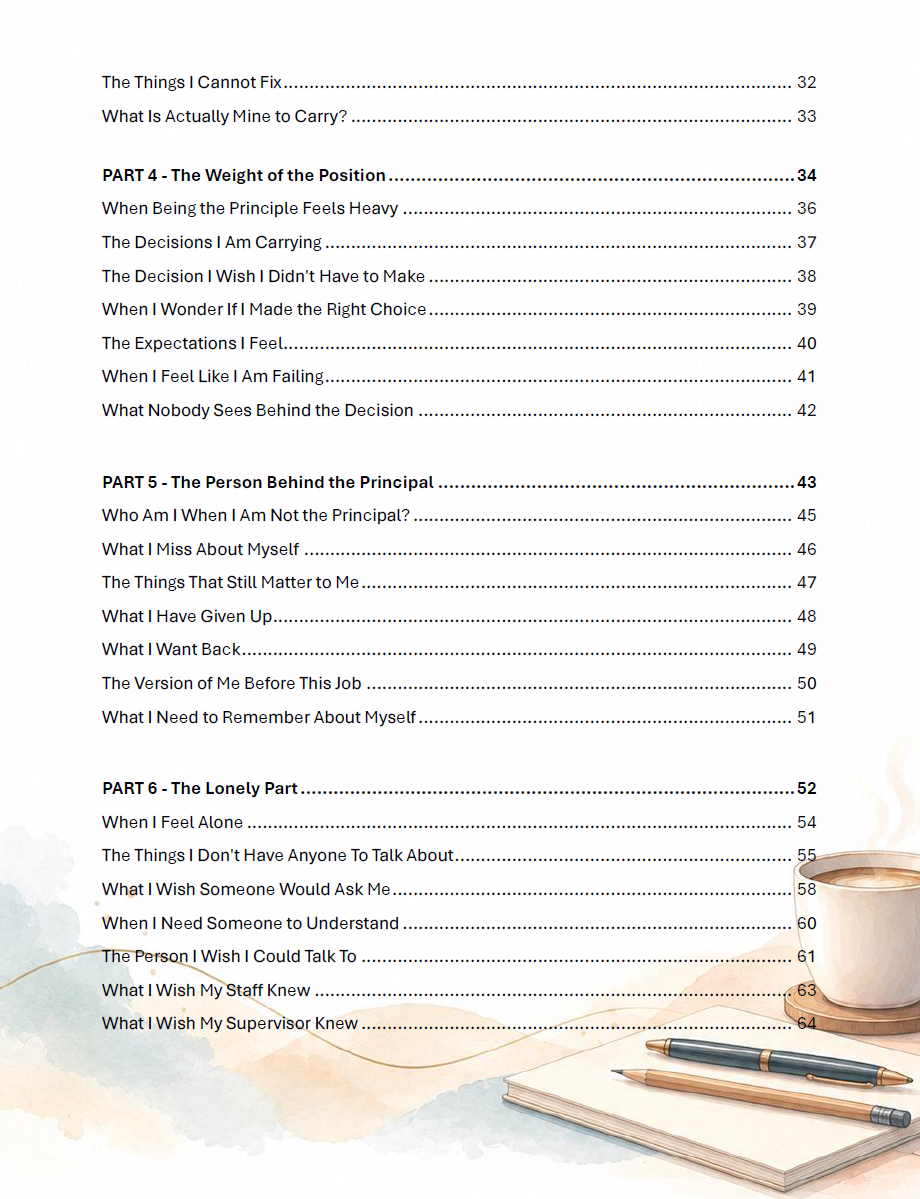
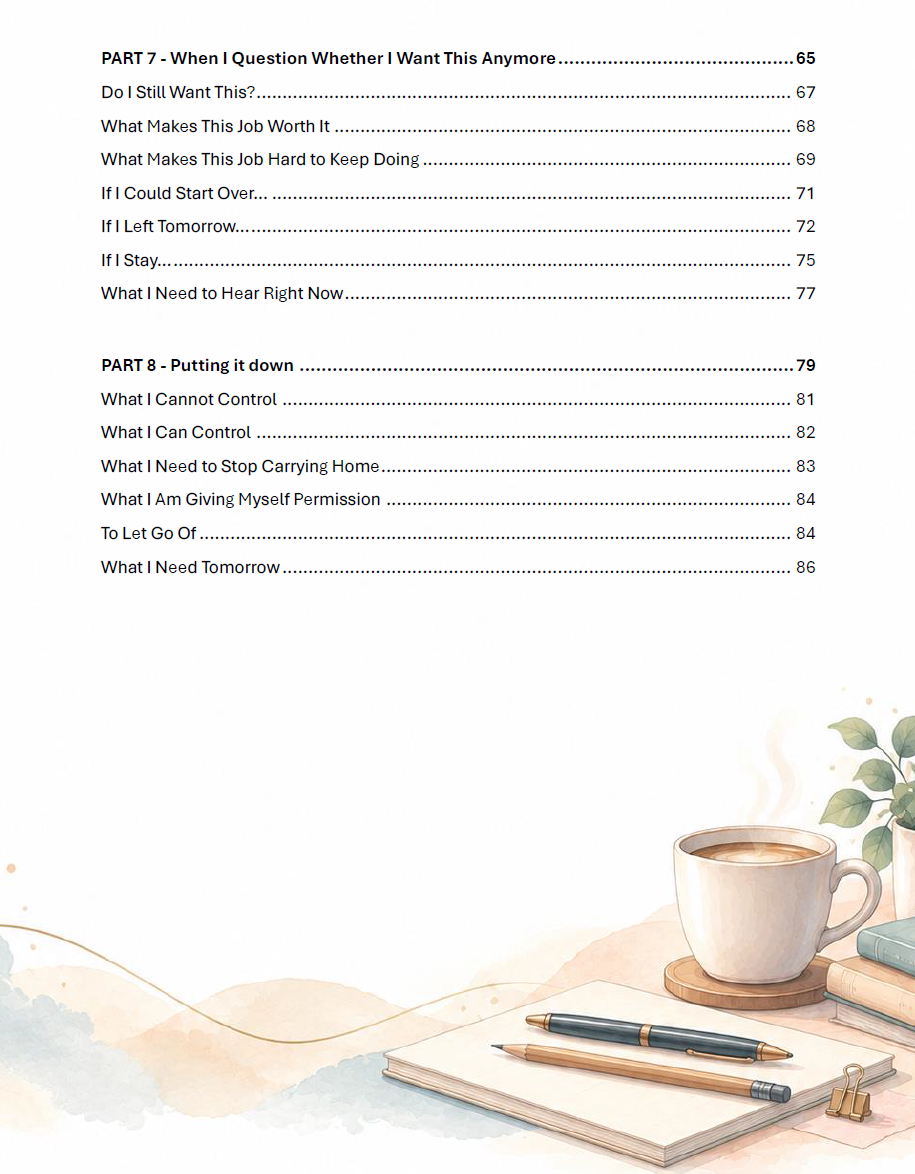
The Principal’s Private Pages is a guided printable journal created specifically for school principals and educational leaders who need a private place to process the parts of the job they cannot always discuss openly.
Not for evaluation.
Not for submission.
Not for anyone else to read.
Just somewhere for the person behind the position to put down what the principal has been carrying.
You don’t have to know what to write.
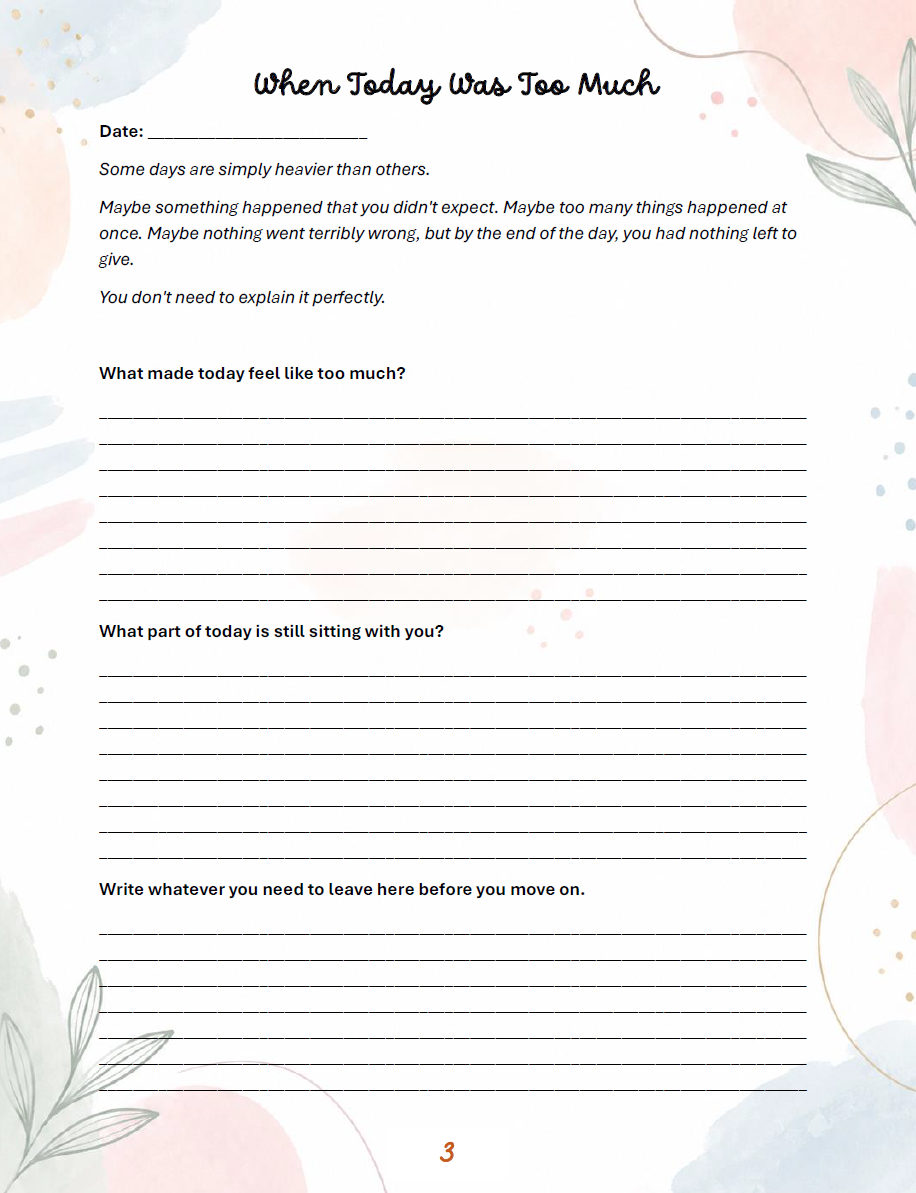
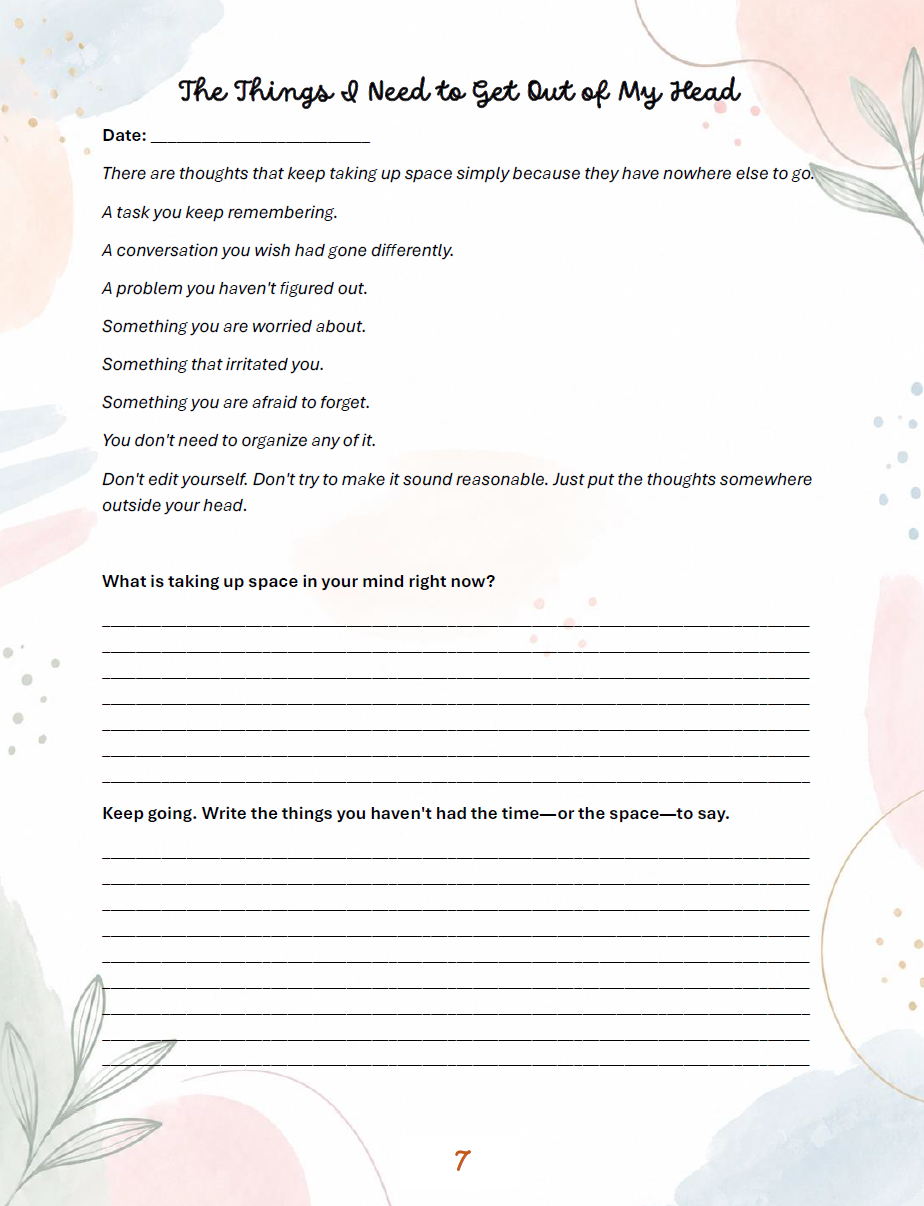
That’s why the pages are guided.
Sometimes a blank journal creates another problem:
Where do I even start?
So this one doesn’t simply hand you an empty page and tell you to reflect.
It meets you inside recognizable moments.
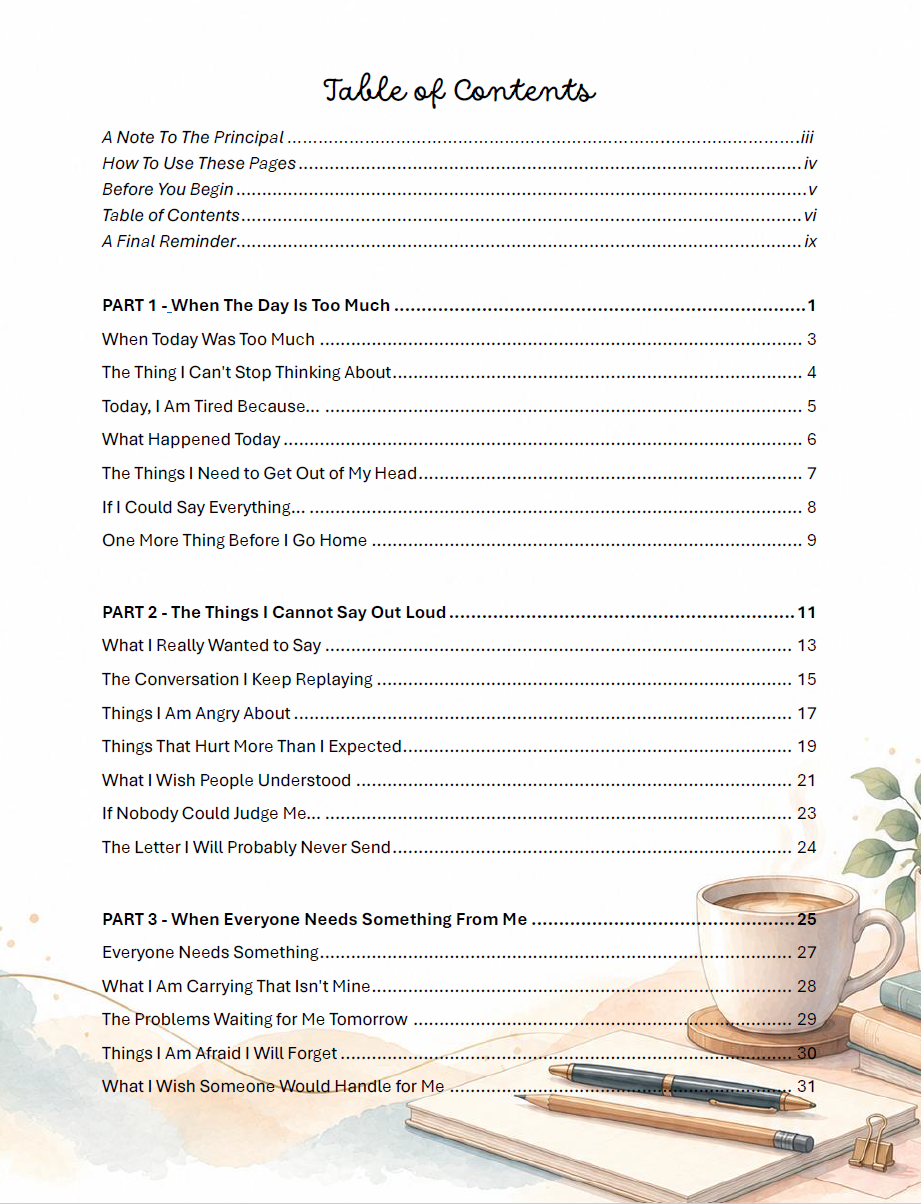
When today was too much.
The conversation you keep replaying.
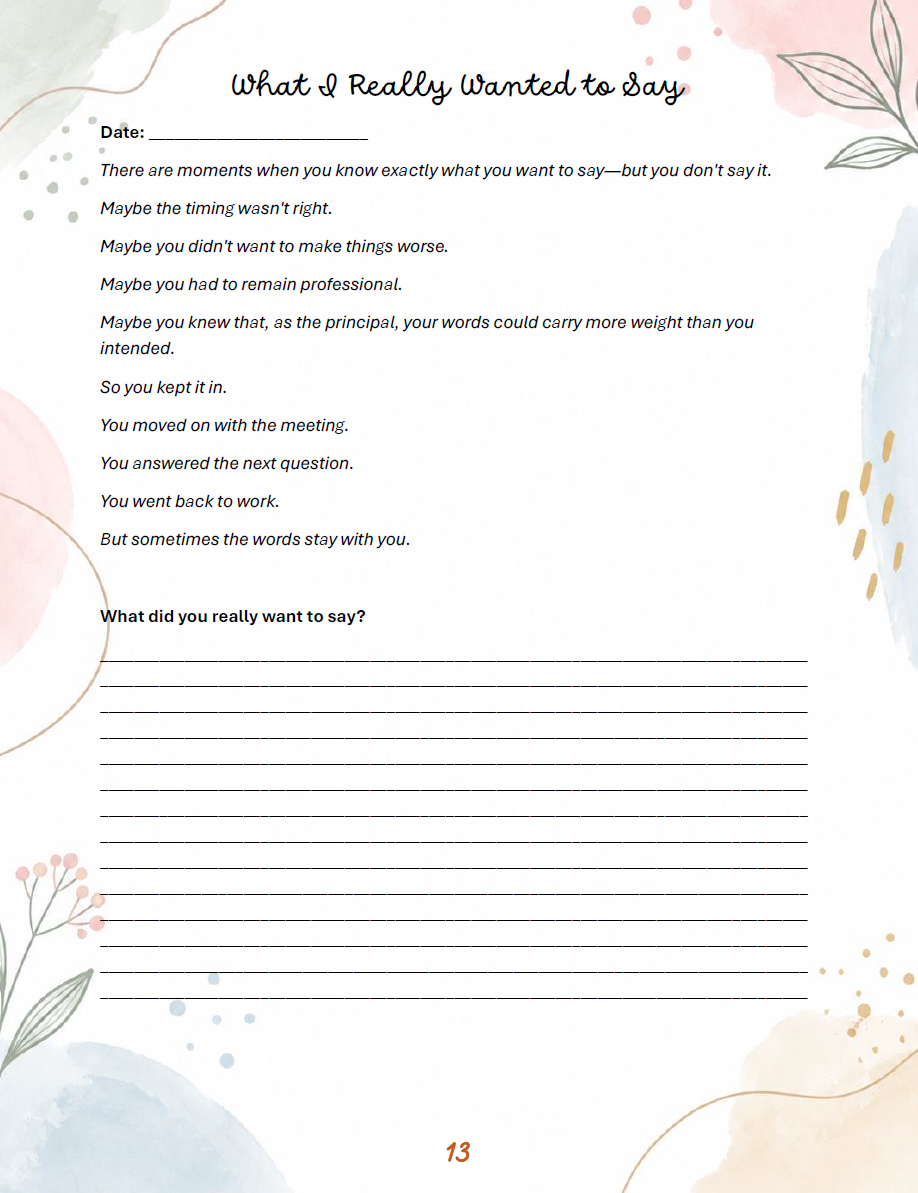
What you really wanted to say.
Things you are angry about.
What you wish people understood.
When everyone needs something from you.
The weight of the position.
The lonely part.
When you question whether you want this anymore.
The prompts are there to open the door.
What you write after that belongs to you.


Some days, you may write a page.
Other days, three sentences may be enough.
You might write after a difficult meeting.
After everyone has gone home.
Before bed because your mind is still at school.
On a weekend when something from Friday refuses to leave you alone.
Or after a perfectly ordinary day when you suddenly realize how tired you are.
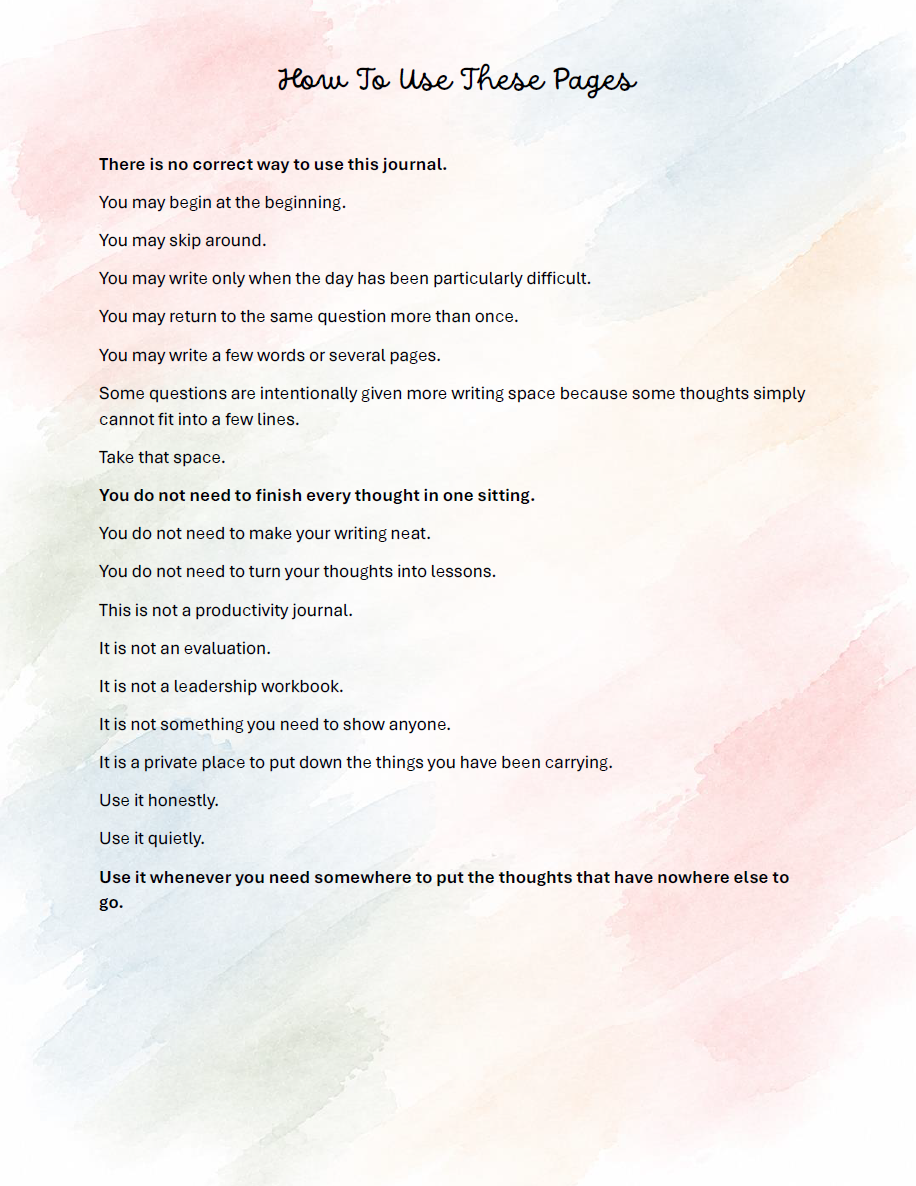
There is no correct way to use it.
No streak to maintain.
No requirement to become “consistent.”
No expectation that every entry ends with gratitude, wisdom, a lesson learned, or a leadership breakthrough.
Some pages may end with:
I still don’t know.
That counts.
Some may contain things you would never say aloud.
That is partly why the journal exists.
This isn’t about turning every difficult feeling into a lesson.
School leaders are already expected to extract lessons from everything.
What worked?
What didn’t?
What will we improve?
What is the action plan?
What are the next steps?
Useful questions.
But sometimes you don’t need an action plan.
Sometimes:
That hurt.
is enough.
Sometimes:
I’m angry about this.
is enough.
Sometimes:
I handled that badly.
is enough.
Sometimes:
I did the best I could with what I knew.
is enough.
And sometimes:
I am tired of everyone needing something from me.
needs to exist somewhere without immediately being corrected into something more professional.
These pages give those thoughts somewhere private to exist.
Because writing something down can change your relationship with it.
Not magically.
The problem may still be there tomorrow.
The employee may still be difficult.
The decision may still need to be made.
The conversation may still have happened exactly as you remember it.
But a thought written on paper is no longer only circling inside your head.
You can look at it.
Question it.
Finish the sentence.
Notice what is actually bothering you.
Sometimes what looked like anger becomes disappointment.
What looked like exhaustion turns out to be resentment.
What looked like:
“I’m done.”
may become:
“I’m exhausted.”
Or perhaps, after enough honest pages, you realize those two things are not the same.
The journal doesn’t decide what your thoughts mean.
It gives you enough room to hear them properly.

There are pages for the things you can’t say out loud.
For the conversation you keep replaying.
The letter you will probably never send.
The person who disappointed you.
The thing you wish people understood.
The day when everyone wanted something.
The pressure attached to your position.
The parts of yourself you miss.
The loneliness nobody sees.
The questions you have about continuing.
And eventually—
the things you may be ready to put down.
The journal moves through different parts of the leadership experience because not every difficult day is difficult for the same reason.
Sometimes the problem is what happened.
Sometimes it is what someone said.
Sometimes it is the responsibility.
Sometimes it is loneliness.
And sometimes the thing that needs attention is simply:
you.
Who is this journal for?
For the principal who thinks about school long after leaving it.
For the school head who needs somewhere to say the version of the sentence that cannot go in the group chat.
For the leader who is carrying a difficult conversation.
For the person who sometimes sits quietly after everyone leaves.
For the principal who doesn’t necessarily want advice.
You may already know what needs to be done.
You just need somewhere to put what it feels like to be the person who has to do it.
It can also be for the school leader who is doing well.
You do not need to be burned out, miserable, or ready to leave before you are allowed to have private thoughts about the job.
You only need to be human enough to have them.
And it is private for a reason.
Leadership can make honesty complicated.
The same sentence can mean something different when it comes from the principal.
So you edit yourself.
Often wisely.
But there should still be somewhere you don’t have to sound like the principal.
Somewhere you don’t need the diplomatic version.
Somewhere you can write:
This annoyed me.
I think that was unfair.
I don’t know what I’m doing with this yet.
I wish someone would ask what I need.
I’m proud of how I handled today.
I think I’m getting better at this.
Because private reflection isn’t only for the difficult things.
There are victories you may barely stop to notice too.
The conversation you handled differently this time.
The boundary you finally kept.
The day you went home without carrying everything with you.
The moment you realized:
I’m learning how to do this without losing all of myself in it.
Print the page you need.
This journal was designed as a printable digital resource.
You don’t have to treat it like a traditional journal that must be completed from beginning to end.
Print the pages.
Keep them somewhere private.
Return to the prompts that matter.
Use one when the day has been too much.
Use another when something is stuck in your head.
Come back to a page weeks later if you need it again.
The journal belongs around your life.
Your life does not need to organize itself around the journal.



You already have enough places to record what the school needs.
Plans.
Reports.
Minutes.
Schedules.
Forms.
Targets.
Notes.
Requests.
Documents.
School leadership creates an extraordinary amount of paper devoted to everyone and everything else.
These pages are for you.
Not your performance.
Not your school.
Not your staff.
Not your next report.
You.
The person who had the difficult conversation.
The person who made the decision.
The person who absorbed everybody’s frustration.
The person who went home afterward.
And the person who deserves somewhere to put the things that shouldn’t have to stay inside all night.
You don’t have to wait until everything becomes too much.
You can use these pages after the hard days.
But you can also use them before the hard days accumulate.
Because sometimes the things we carry aren’t enormous.
They’re small.
One conversation.
One irritation.
One disappointment.
One decision.
One more thing you didn’t say.
Then another.
Then another.
Until your mind becomes the storage room for everything the position required you not to express.
You don’t need to turn every thought into a conversation.
But you also don’t have to carry every thought indefinitely.
Some things can simply be written down.
Seen.
Understood.
And, when you’re ready—
left on the page.
Some things need somewhere to go.
You spend enough of your day holding things for other people.
Their concerns.
Their complaints.
Their questions.
Their anger.
Their uncertainty.
Their expectations.
This journal isn’t asking you to hold one more thing.
It’s giving you somewhere to put some of it down.
No audience.
No evaluation.
No leadership performance.
Just a page.
A pen.
And whatever you couldn’t say today.
The Principal’s Private Pages
A Private Journal for the Person Behind the Position
50 guided prompts for the thoughts, conversations, pressures, questions, and emotions that come with leading a school.
Printable Digital PDF · 50 Guided Prompts
Print the page you need. Write what you need to write. Leave it there when you’re ready.

Contact Us
You don’t need another person telling you to lead harder. Sometimes you need something that understands what the job actually feels like.