
Hello, The Good Principal.
Please call me Daniel. That is not my real name.
I’m a public school principal somewhere in Ontario, Canada. I’ve been in education for 23 years and in school leadership for almost eight.
I’m not new to this anymore.
That is probably why this is a little embarrassing to write.
I’ve dealt with angry parents, staff conflicts, district deadlines, student issues, difficult conversations… the usual things that come with the job. Most days, I think I handle it reasonably well.
But a few weeks ago, I did something that still bothers me.
Not because it caused a problem.
It didn’t.
Actually, nobody probably even knew what I did.
That might be why I’m writing this here.
I don’t think I could tell anyone in my own school without feeling stupid afterward.
If you think this is worth posting, please do. Maybe another principal has done the same thing and just never admitted it.
It happened after lunch.
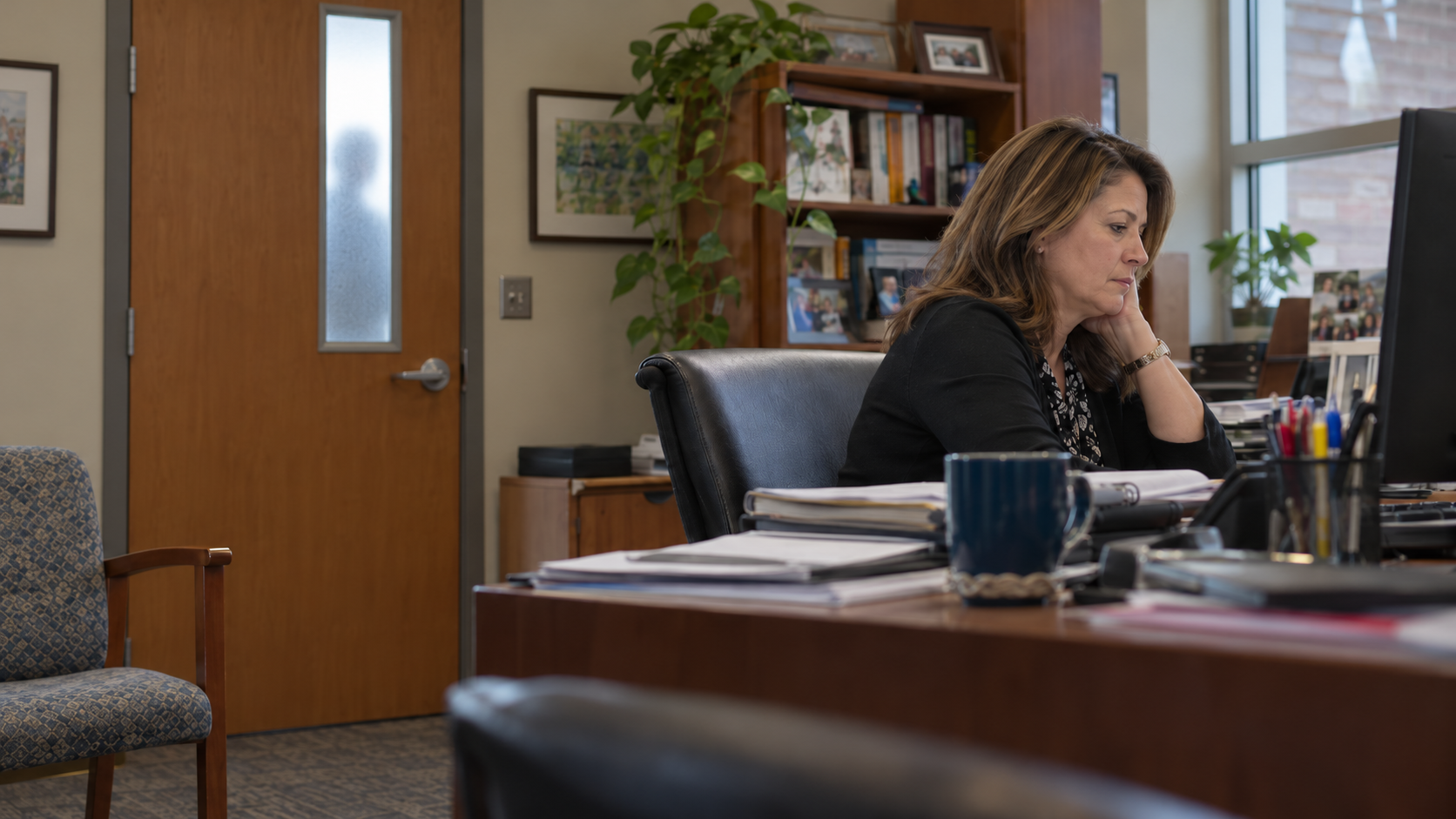
I was already tired and I had finally managed to close my office door.
Then I heard the knock.
Twice.
And I just sat there.
My office door was closed, but I wasn’t in a meeting. I wasn’t on a call. I wasn’t signing anything important.
Actually, I wasn’t doing anything.
I was just sitting there staring at my laptop screen.
Then someone knocked again.
I knew who it was.
One of the teachers.
I had seen her earlier walking toward my office carrying a folder, and I already had a feeling she was coming to see me. So when I heard the knock…
I didn’t answer.
I even stopped moving, which is stupid because obviously she couldn’t see me through the door lol.
But I actually sat there like a kid pretending nobody was home.
She knocked one more time.
“Sir?”
I heard it clearly.
And I still said nothing.
After maybe a few seconds, I heard her walk away.
And the worst part?
I felt relieved.
Like… really relieved.
Not guilty.
Not immediately anyway.
Just relieved.
Because I knew that folder probably meant another thing I had to read, approve, fix, explain, decide, or follow up.
And I just didn’t want another thing.
That morning had already been nonstop. A parent came in before I even finished my coffee. Then two teachers had an issue with the schedule. Someone from the district called about something I honestly forgot was due. There was also a student concern. Then a staff member asked me something that started with, “Sir, quick question…”
It was not quick.
They’re never quick.
By lunch I had already talked to so many people that I didn’t even want to hear my own voice anymore.
And I know…
this is literally part of the job.
People come to the principal because they need something. I signed up for this. Nobody forced me.
That’s exactly why this is difficult to admit.
Because what kind of principal hears one of their teachers outside the door and just… ignores them?
Apparently me.
At least that day.
I think what bothered me most was that she wasn’t even someone I disliked.
She’s nice.
Hardworking too.
She probably had a legitimate reason for coming.
That actually made me feel worse later.
If it was someone I found difficult, maybe I could’ve convinced myself I was avoiding drama.
But no.
She was just doing what teachers do.
She needed something from the principal.
And the principal was inside pretending he wasn’t there.
About twenty minutes later, I opened the door.
The hallway was quiet.
Her folder wasn’t outside or anything dramatic like that. Nobody was waiting. Everything just continued like normal.
I finally checked my phone and saw a message from her.
“Sir, I came by earlier. I’ll just come back tomorrow. Thank you.”
That was it.
No guilt trip.
No emergency.
No “I know you were inside.”
Nothing.
And somehow that made me feel worse.
I almost replied right away.
Then I didn’t.
I told myself I’d talk to her tomorrow.
Which I did.
She came back the next morning.
It was about a request she needed me to approve.
Took maybe five minutes.
Five.
Minutes.
That was what I was hiding from.
Five minutes.
But if I’m being completely truthful, it wasn’t really the five minutes.
It was the possibility that it wouldn’t be five minutes.
Or that after her, somebody else would come.
Then somebody else.
Then somebody would call.
Then I’d spend the whole day solving things and at 5 PM finally remember the work I had planned to do at 8 in the morning.
I think sometimes I’m not avoiding the person.
I’m avoiding becoming available again.
Because once people know you’re available, that’s it.
“Sir, since you’re here…”
“One more thing…”
“Can I ask something?”
“Can you check this?”
“Do you have a minute?”
And yes, I do.
Technically.
That’s the problem.
There are always minutes.
You can always squeeze in one more person.
One more question.
One more problem.
Until somehow the day belongs to everyone except you.
I’ve done other stupid things too.
Pretended I was on the phone.
Looked very serious at my computer when someone walked past.
Told someone, “Give me ten minutes, I just need to finish this,” when there was absolutely nothing urgent on my screen.
Once I even opened a spreadsheet just so I looked busy.
A spreadsheet.
I hate spreadsheets.
I know some principals have that open-door thing where anyone can walk in anytime.
And good for them.
Seriously.
But some days, if my door stays open the whole day, I feel like I’m slowly disappearing behind everyone else’s needs.
Maybe that sounds dramatic.
It’s not even dramatic when it happens.
It’s mostly boring.
People coming in. People leaving. Questions. Forms. Calls. Messages. You keep saying yes. You keep listening. You keep solving.
Then suddenly you’re irritated at someone who did absolutely nothing wrong except ask you for help at the wrong time.
That’s the part nobody sees.
They see you answer.
They don’t see the two seconds before you answer when your brain says:
Please. Not another one.
And maybe I’m not supposed to say that.
Maybe principals are supposed to always be available.
Approachable.
Patient.
Present.
Whatever.
I try.
Most days I think I do okay.
But no, I am not always happy when someone knocks on my door.
Sometimes I hear the knock and genuinely hope they leave.
Sometimes I see a message and don’t open it yet because once I open it, now I know.
And once I know, somehow it becomes mine too.
Sometimes I close my office door because I need privacy.
And sometimes…
I close it because I just don’t want anybody to come in.
That day, I heard someone outside.
I knew she needed me.
And I pretended I wasn’t there.
Not proud of it.
Not exactly ashamed either.
Mostly just surprised at how badly I needed those twenty minutes.
I still don’t know what that says about me.
Maybe I’m just tired.
Maybe I’ve become too available for too long.
Maybe I’m starting to avoid people when what I actually need is better boundaries.
I honestly don’t know.
That’s why I’m sending this.
I’d really like to know what The Good Principal thinks.
And if other principals have ever done something like this, I’d like to hear that too.
Not because I want someone to tell me it was okay.
I know ignoring someone isn’t exactly good leadership.
I think I just want to know whether this feeling is more common than we admit.
Thank you for giving school leaders somewhere to say things like this without having to pretend we handled everything perfectly.
— “Daniel”
FROM THE GOOD PRINCIPAL’S OFFICE
Daniel, the part I would pay attention to is not only that you ignored the knock.
It is what the knock had started to mean to you by that point in the day.
Because from the outside, it was one teacher carrying one folder.
Five minutes, as you eventually discovered.
But from where you were sitting, it was not five minutes anymore.
It represented one more decision.
One more thing to read.
One more follow-up.
One more conversation that might lead to another conversation.
One more piece of the school entering your head when you were already full.
That does not make ignoring the teacher ideal.
You know that already.
But simply telling yourself, “Next time, answer the door,” probably will not solve much either.
The better question is:
Why did pretending you were unavailable feel easier than simply saying you were unavailable?
That is where I think the real issue is.
You seemed to believe that needing twenty quiet minutes was not a good enough reason to close the door.
If you were in a meeting, fine.
If you were on the phone, fine.
If you were working on something urgent, fine.
But simply needing twenty minutes where nobody asked anything of you?
That did not feel legitimate enough.
So you had to manufacture legitimacy.
Look busy.
Open the spreadsheet.
Pretend to be on the phone.
Say you were finishing something.
That is worth changing.
Because there is a very important difference between being approachable and being available every minute.
An approachable principal can still say:
“I want to hear this, but I can’t give it proper attention right now. Can you come back at 2?”
That is not rejection.
Actually, in some situations, it may be more respectful than letting someone come in when half of your mind is silently wishing they would leave.
You may need to create some visible structure around your availability.
Nothing complicated.
Maybe one short protected period in the morning and another in the afternoon.
Thirty minutes where the door is closed unless something is genuinely urgent.
Let people know what it means.
Not:
“Do not bother me.”
More like:
“I use this time for work that needs uninterrupted attention. If something is urgent, please let the office know. Otherwise, I’ll be available afterward.”
That removes the hiding.
Nobody has to guess whether you are angry.
You do not have to pretend there is a phone call.
And your staff knows when they can come back.
I would also look at how automatically you say yes.
You wrote something important:
“There are always minutes.”
That is true.
There is almost always room to squeeze in one more person.
The problem is that those squeezed-in minutes still come from somewhere.
The report gets pushed.
Lunch gets pushed.
The decision you needed time to think about gets pushed.
Then eventually your own capacity gets pushed.
And by the time you finally say no, it may not come out as a clean boundary.
It comes out as avoidance.
That may be what happened here.
You did not necessarily need less compassion.
You probably needed an earlier no.
Or an earlier “later.”
Or an earlier closed door.
Before you got to the point where hearing footsteps made you freeze.
There is also another line in your confession that I would take seriously:
“Once I know, somehow it becomes mine too.”
That is a real part of leadership.
A teacher tells you something and now you are thinking about it.
A parent raises an issue and now it is in your head.
A student problem reaches you and now you are wondering what happens next.
Even if you do not act immediately, the mental tab is open.
So uninterrupted time is not only about productivity.
Sometimes it is about preventing ten more tabs from opening before you have closed any of the existing ones.
That is why twenty minutes of quiet can feel disproportionately valuable.
You may not have needed twenty minutes to “do nothing.”
You may have needed twenty minutes where nothing new entered.
That is different.
So if I were in your position, I would ask myself a few very practical questions:
Do I have any predictable time during the day when people know I am not immediately available?
Do staff understand the difference between urgent and “I need an answer sometime today”?
Do I say “come in” before I even check whether I have the capacity to listen properly?
Am I waiting until I am already irritated before I finally protect my time?
Am I avoiding everyone occasionally because I have never learned how to postpone one person honestly?
Those answers may tell you whether this was simply one bad afternoon or part of a pattern.
And I would watch one other thing carefully.
If you find yourself repeatedly avoiding the same person, delaying conversations because you do not want to deal with conflict, or using “I need space” as a way to postpone responsibilities you know require action, that is different.
Then the avoidance itself deserves attention.
But that is not what this confession sounds like.
This sounds more like somebody who had been available for too long and eventually took twenty minutes in the only way he felt allowed to take them.
By disappearing.
You do not have to do that.
Next time, try something less dramatic.
When the knock comes:
“I can’t talk properly right now. Can you give me twenty minutes?”
Or:
“I want to hear this, but I need to finish something first. Come back at 1:30.”
No fake meeting.
No fake phone call.
No spreadsheet you hate.
Just a boundary.
You may feel rude the first few times.
Especially if you have built your identity around being the principal whose door is always open.
But an open-door policy should not mean an always-open person.
There is a difference.
And maybe the goal is not to make sure you never think “please go away” again.
You are human.
You probably will.
The goal is to notice the feeling sooner, before the only option left in your head is pretending you are not therE.
Share Your Thoughts